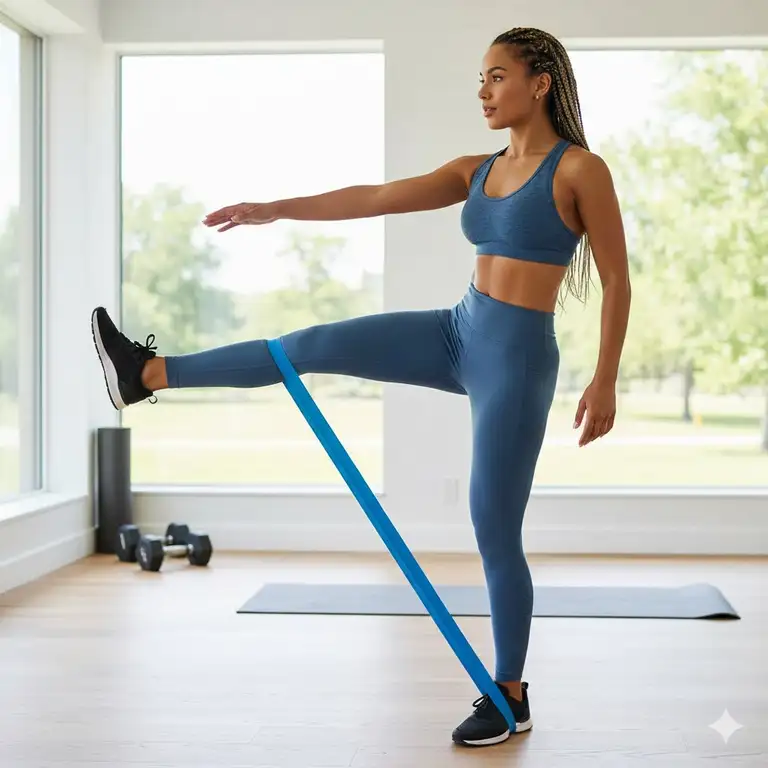
Let’s be real for a second. You’re hitting the gym, you’re doing your squats, you’re pounding out lunges, but you still feel like something is missing. That “side-butt” area (your gluteus medius) isn’t popping, your hips feel a bit unstable, and you’re just not getting the activation you want. What gives?
The answer might not be another giant, intimidating machine. In fact, it might be one of the most overlooked, affordable, and powerful tools in fitness: the humble ankle band. These simple contraptions are a secret weapon for anyone serious about building a stronger, more sculpted, and more resilient lower body. Whether you’re using simple loops at home or strapping into a cable machine, ankle bands isolate muscles that heavy compound lifts can sometimes miss.
✨Was this helpful? Spread the word! 🚀
This guide is your deep dive. We’re going to cover everything from the two distinct types of ankle bands (and yes, they are different) to the top 7 products on the market, and exactly how to use them to finally get the results you’ve been working for.
Before we get into the nitty-gritty, let’s look at why these bands are such a game-changer compared to just sticking with traditional weights.
Table 1: Ankle Bands vs. Traditional Weights (Dumbbells/Barbells)
| Feature | Ankle Bands (Loops & Cuffs) | Traditional Free Weights |
| Primary Resistance | Elastic/Linear Tension | Gravity (Constant Weight) |
| Muscle Activation | 🔥 Excellent for targeted isolation (glute medius, adductors) | ✅ Good for large, compound muscle groups |
| Joint Impact | 👟 Very Low | Can be high, especially with poor form |
| Portability | 🎒 Excellent (Fits in a pocket) | 🏋️♀️ Poor (Requires a gym or large home setup) |
| Cost | 💲 Very Low ($10 – $30) | 💲💲💲 High (Can cost hundreds or thousands) |
| Use Case | Activation, sculpting, rehab, home workouts | Building mass, max strength, compound lifts |
Quick Comparison: Top Ankle Bands & Straps for 2025
I know you’re busy and want the top-line info fast. Here is a quick look at the best ankle bands and straps we’re going to cover.
Table 2: Top Picks at a Glance
| Product | Type | Best For… | Material |
| Fit Simplify Resistance Loop Bands | Loop (Latex) | Overall Value & Versatility | Natural Latex |
| Arena Strength Fabric Booty Bands | Loop (Fabric) | Non-Slip Glute Work | Woven Fabric & Rubber |
| DMoose Fitness Ankle Straps | Cuff (Strap) | Cable Machines (Overall) | Neoprene & Nylon |
| TheraBand Resistance Band Loop Set | Loop (Latex-Free) | Physical Therapy & Rehab | Thermoplastic Elastomer |
| FITGIRL Ankle Strap | Cuff (Strap) | Comfort & Style (Cables) | Neoprene & “CUTE” factor |
| GymBros Fabric Resistance Bands | Loop (Fabric) | Heavy-Duty Strength | Polyester Cotton & Latex |
| Harbinger Padded Ankle Cuff | Cuff (Strap) | Durability & Heavy Lifting | Synthetic Leather & Steel |
Top 7 Ankle Bands: Expert Analysis & Reviews
We’ve scoured Amazon, dug through hundreds of reviews, and analyzed the specs to bring you the best ankle bands for every goal. We looked at durability, comfort, real-world user feedback, and value.
1. Fit Simplify Resistance Loop Exercise Bands (Best Overall Value)
If you’re just starting or want the most bang for your buck, this is your set. You’ve probably seen these simple latex loops everywhere, and for good reason.
-
Specifications:
-
Type: Loop Bands
-
Material: 100% Natural Latex
-
Pieces: Set of 5 bands
-
Resistance: X-Light, Light, Medium, Heavy, X-Heavy
-
-
Customer Review Analysis:
-
Users overwhelmingly praise the value of getting five different resistance levels in one small bag. This allows for perfect progressive overload.
-
A common positive note is their use in physical therapy, with the lighter bands being perfect for rehab.
-
The most frequent complaint is that the lighter latex bands can roll up or bunch during dynamic movements like lateral walks, which can be frustrating. Some users also report snapping after 6-12 months of heavy use.
-
-
Warranty: Typically includes a lifetime warranty or satisfaction guarantee from the seller.
-
Pros:
-
✅ Incredibly affordable and high-value.
-
✅ 5 distinct resistance levels for clear progression.
-
✅ Extremely portable.
-
-
Cons:
-
❌ Can roll up during exercises.
-
❌ Not as durable as fabric bands; can snap.
-
❌ Not ideal for heavy-lifters, who may find “X-Heavy” too light.
-
2. Arena Strength Fabric Booty Bands (Best Non-Slip Fabric)
For anyone tired of bands rolling, snapping, or pulling on leg hair, fabric ankle bands for glutes are a revolution. Arena Strength is a leader in this space.
-
Specifications:
-
Type: Loop Bands (Fabric)
-
Material: Woven Fabric with Non-Slip Rubber Grips (inner side)
-
Pieces: Set of 3 bands
-
Resistance: Labeled as Small, Medium, Large (size dictates resistance)
-
-
Customer Review Analysis:
-
The praise is almost universal for one thing: they do not roll. Users love the thick, durable feel and the rubber grips that keep the band locked in place.
-
Reviewers consistently mention a “significantly stronger burn” in their glutes compared to latex bands, likely due to the heavier, more consistent tension.
-
The main critique is the lack of granular resistance. The 3-band set is a big jump from “medium” to “heavy,” and some users wish for more in-between steps.
-
-
Warranty: Comes with a 12-month warranty against snapping or breaking.
-
Pros:
-
✅ 100% non-slip and non-rolling design.
-
✅ Extremely durable and washable.
-
✅ Provides very strong resistance for glute building.
-
-
Cons:
-
❌ More expensive than latex sets.
-
❌ Less “stretchy,” offering a different feel.
-
❌ Only 3 resistance levels.
-
3. DMoose Fitness Ankle Straps for Cable Machines (Best for Cable Machines)
Now we move to the other category: ankle cuffs. If you have a gym membership, a pair of these is non-negotiable for lower body day. The DMoose straps are a fan favorite.
-
Specifications:
-
Type: Ankle Cuff (Strap)
-
Material: Padded Neoprene, Nylon Strap
-
Pieces: Sold as a pair
-
Connection: Two heavy-duty metal D-rings
-
-
Customer Review Analysis:
-
Users love the double D-ring design. They report it feels much more secure and stable, distributing the weight evenly during heavy kickbacks instead of pulling from one small point.
-
The padding is frequently mentioned as thick and comfortable, preventing any chafing or digging into the ankle.
-
A few users with very small ankles mentioned they had to crank the Velcro strap to its absolute tightest, but it still held.
-
-
Warranty: DMoose offers a lifetime satisfaction guarantee.
-
Pros:
-
✅ Double D-ring design provides superior stability.
-
✅ Thick, comfortable neoprene padding.
-
✅ Built to last and handle heavy weight.
-
✅ Sold as a pair.
-
-
Cons:
-
❌ Only useful if you have access to a cable machine.
-
4. TheraBand Resistance Band Loop Set (Best for Physical Therapy)
TheraBand is the brand you’ll see in 9 out of 10 physical therapy clinics. They set the standard for rehab and corrective exercise.
-
Specifications:
-
Type: Loop Bands
-
Material: High-Quality Thermoplastic Elastomer (Latex-Free)
-
Pieces: Set of 4 bands
-
Resistance: Yellow, Red, Green, Blue (a trusted, scientifically-tested progression)
-
-
Customer Review Analysis:
-
This is the go-to for physical therapists and patients. Reviews are filled with stories of recovering from knee surgery, hip impingement, and rotator cuff issues.
-
Users trust the TheraBand resistance progression, which is standardized and reliable.
-
Like other simple-loop bands, they can roll. They are also not designed for maximum strength building; they are for activation and recovery. The “heavy” blue band may be too light for seasoned athletes.
-
-
Warranty: Standard manufacturer’s warranty.
-
Pros:
-
✅ The gold standard in physical therapy.
-
✅ Latex-free, making them great for allergy sufferers.
-
✅ Consistent, trusted resistance levels.
-
-
Cons:
-
❌ Not designed for heavy-duty strength training.
-
❌ Can still roll.
-
❌ More expensive than generic latex bands.
-
5. FITGIRL Ankle Strap for Cable Machine (Best Cuff for Comfort)
The FITGIRL brand has carved out a niche by making high-quality, comfortable gear with a bit of personality. Their ankle strap is a prime example.
-
Specifications:
-
Type: Ankle Cuff (Strap)
-
Material: Padded Neoprene
-
Pieces: Sold as a pair
-
Connection: Single D-ring
-
-
Customer Review Analysis:
-
The number one word in the reviews is “comfortable.” Users (particularly women, for whom it’s marketed) find the padding softer and less bulky than other “industrial” looking cuffs.
-
They come in various colors and patterns (like pink and leopard print), which users love.
-
While comfortable, some heavy lifters note that the single D-ring design can twist or pull to one side on very heavy sets, unlike the DMoose double-ring.
-
-
Warranty: Backed by a 100% satisfaction guarantee.
-
Pros:
-
✅ Exceptionally comfortable and soft padding.
-
✅ Stylish designs and colors.
-
✅ Durable enough for most gym-goers.
-
-
Cons:
-
❌ Single D-ring is less stable than a double ring.
-
❌ May not be robust enough for extreme powerlifters.
-
6. GymBros Fabric Resistance Bands (Best Heavy-Duty Fabric Option)
If the Arena Strength bands are the popular choice, the GymBros (a lesser-known but high-quality alternative) are for those who want serious, uncompromising resistance.
-
Specifications:
-
Type: Loop Bands (Fabric)
-
Material: Premium Polyester Cotton and Latex Blend
-
Pieces: Set of 3 bands
-
Resistance: Light, Medium, Heavy (all 3.15 inches wide)
-
-
Customer Review Analysis:
-
Reviewers are consistently impressed with the thickness and quality of the material. These are often described as “tough” and “built to last.”
-
The “Heavy” band is noted as being extremely difficult, making it a favorite for advanced users who find other bands too easy.
-
The non-slip grip works as advertised. The only minor complaint is that the material has slightly less “give” than other fabric bands, feeling more rigid.
-
-
Warranty: Typically includes a satisfaction guarantee or replacement warranty.
-
Pros:
-
✅ Extremely heavy-duty resistance for advanced users.
-
✅ Wide, comfortable, non-roll design.
-
✅ High-quality, durable materials.
-
-
Cons:
-
❌ “Heavy” band may be unusable for beginners.
-
❌ Less stretchiness than latex or other fabric blends.
-
7. Harbinger Padded Ankle Cuff (Most Durable Single Cuff)
Harbinger is a legacy brand in weightlifting accessories. Their ankle cuff is a no-nonsense, old-school, durable piece of equipment.
-
Specifications:
-
Type: Ankle Cuff (Strap)
-
Material: Synthetic Leather (polypropylene) and Padded Lining
-
Pieces: Sold as a single cuff
-
Connection: Single, heavy-gauge steel D-ring
-
-
Customer Review Analysis:
-
The key theme is durability. Users report owning this cuff for 5, 7, or even 10+ years. The synthetic leather and heavy-duty stitching are built for abuse.
-
The lining is comfortable, though perhaps less “plush” than the neoprene on the DMoose or FITGIRL.
-
The biggest “con” is that it’s sold as a single cuff. This is fine for most exercises (where you use one leg at a time), but you’ll need to buy two if you want a pair, doubling the cost.
-
-
Warranty: 90-day manufacturer’s warranty.
-
Pros:
-
✅ Exceptionally durable and long-lasting.
-
✅ Heavy-gauge steel D-ring can handle anything.
-
✅ Trusted, old-school brand.
-
-
Cons:
-
❌ Sold as a single cuff, not a pair.
-
❌ Padding is effective but less “soft” than competitors.
-
✨ Don’t Miss These Exclusive Deals!
🔍 Ready to take your lower body workouts to the next level? These ankle bands are the key. Click on any of the highlighted product names above to check current pricing, see more reviews, and find your perfect match on Amazon!
💬 Just one click – help others make better buying decisions too!😊
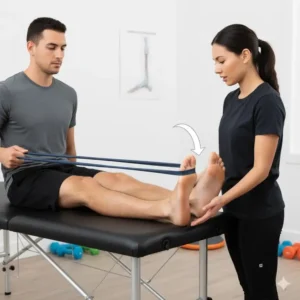
What Exactly Are Ankle Bands? (And Why You Need Them)
Okay, so we’ve seen the products. But what are we buying? The term “ankle bands” is a bit of a catch-all for two different, but related, types of fitness gear. It’s crucial to know which one is right for your goals.
Type 1: Loop Bands (Mini-Bands / Booty Bands)
This is what most people picture. It’s a single, continuous loop of elastic material (latex or fabric). You don’t attach it to anything; the resistance comes from pulling the band apart with your own body.
-
How they work: You typically place the loop band around both legs. This could be around your ankles, just below your knees, or just above your knees (around your thighs).
-
What they’re for: These are the kings of activation. They provide constant tension on your hips and glutes, especially the “side glutes” (gluteus medius/minimus). They are perfect for warm-ups (like lateral walks and clamshells) to “wake up” your glutes before squatting, or for at-home workouts focused on sculpting.
-
Materials: They come in two flavors:
Table 3: Latex vs. Fabric Loop Bands
| Feature | Latex / TPE Loops (like Fit Simplify) | Fabric Loops (like Arena Strength) |
| Feel | Stretchy, pliable, thin | Thick, sturdy, less “give” |
| Grip | Can slip, roll, and bunch up | ⛔ Won’t Roll. Often has rubber grip. |
| Durability | Can snap, degrades over time | 🛡️ Highly Durable. Washable. |
| Resistance | Good for light/rehab work, 5-6 levels | Excellent for heavy glute work, 3-4 levels |
| Best For | Physical therapy, beginners, budget | Glute building, “booty” workouts, anti-roll |
Type 2: Ankle Cuffs (Ankle Straps)
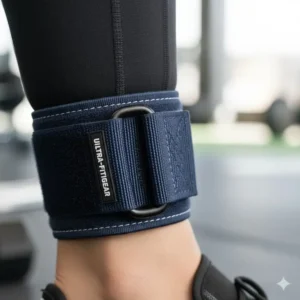
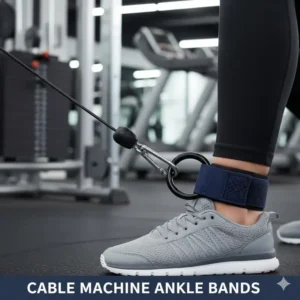
This is a totally different tool. An ankle cuff (or ankle strap) provides no resistance on its own. It is a comfortable, padded cuff you wrap around your ankle. The cuff has one or two metal D-rings on it.
-
How they work: You attach the D-ring to a cable pulley machine (at the gym) or a long resistance tube (at home). The resistance comes from the weight stack or the tube, not the cuff itself.
-
What they’re for: This is for building strength and muscle. It allows you to perform isolated leg exercises with heavy, linear resistance. Think cable kickbacks, cable hip abductions, and cable leg curls. These ankle strap bands are what build that “shelf” booty and strong, defined legs.
-
Materials: They are almost always made of padded neoprene for comfort, with a strong nylon strap and steel D-rings.
Table 4: Loop Bands vs. Ankle Cuffs: Which is for You?
| You Should Get… | Loop Bands | Ankle Cuffs (Straps) |
| If you work out at home | ✅ YES | Maybe (if you buy separate tubes) |
| If you go to a gym | ✅ YES (for warm-ups) | ✅ ABSOLUTELY |
| Your goal is “activation” | 🔥 THE BEST | Good |
| Your goal is building muscle size | Good (with fabric bands) | 🔥 THE BEST |
| Your goal is rehab/PT | ✅ YES (Latex/TheraBand) | No (usually too heavy) |
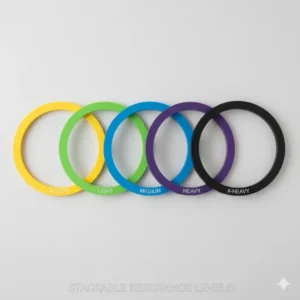
The Science-Backed Benefits of Using Bands for Ankles
Why bother with these? Because they work in a way that big, heavy lifts can’t.
1. Targeted Glute Activation (Hitting the “Side Butt”) 🍑
Look, sitting all day gives us what’s called “gluteal amnesia.” Your biggest muscles forget how to fire. Ankle bands, especially loops, force your hip abductors (the gluteus medius and minimus) to wake up and work. These are the muscles that give your hips a round, full shape and, more importantly, stabilize your pelvis. When you do lateral walks with a band, you’re directly targeting these oft-neglected muscles.
2. Injury Prevention and Rehabilitation
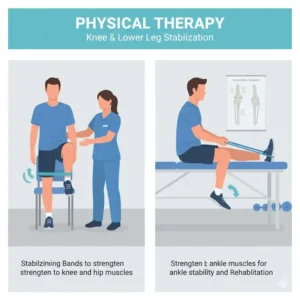
Weak hip abductors are a primary cause of knee pain (like Patellofemoral Pain Syndrome) and lower back issues. As noted by many physical therapists, strengthening these small stabilizers with ankle resistance bands provides stability “upstream” that protects your knees and back “downstream.” This is why TheraBand loops are a staple in rehab clinics.
3. Unbelievable Portability and Convenience 🎒
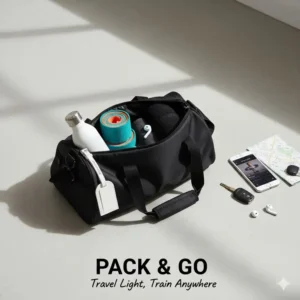
This is a no-brainer. An entire set of Fit Simplify loop bands weighs a few ounces and fits in a tiny mesh bag. You can get a killer lower-body pump in a hotel room, at the park, or in your living room. There is no excuse to miss a workout.
4. Enhancing Your Main Lifts (Squats & Deadlifts)
Ever feel your knees caving in when you squat? That’s weak glute medius. Using a loop band (placed just above or below the knees) during your squat warm-ups or even light sets teaches you to actively push your knees out. This “cues” your glutes to fire, resulting in a stronger, safer squat. Using bands for ankles as a warm-up is a pro-level technique.
Table 5: Benefits vs. Traditional Free Weights
| Benefit | Ankle Bands | Free Weights (Squats/Deadlifts) |
| Gluteus Medius Isolation | ⭐⭐⭐⭐⭐ (5/5) | ⭐⭐ (2/5) |
| Gluteus Maximus (Mass) | ⭐⭐⭐ (3/5) | ⭐⭐⭐⭐⭐ (5/5) |
| Safety for Joints | ⭐⭐⭐⭐⭐ (5/5) | ⭐⭐⭐ (3/5) |
| Corrective Exercise | ⭐⭐⭐⭐⭐ (5/5) | ⭐ (1/5) |
| Max Strength Building | ⭐⭐ (2/5) | ⭐⭐⭐⭐⭐ (5/5) |
How to Choose the Perfect Ankle Bands for Working Out
Okay, you’re sold. But which one? Here’s your buyer’s guide.
Factor 1: Resistance Level (The #1 Consideration)
This is the most important factor.
-
For Beginners/Rehab: Start with a latex loop set like Fit Simplify. You need the “X-Light” and “Light” options. Starting too heavy will just train bad habits.
-
For Intermediate/Sculpting: You’re a great candidate for a fabric loop set like Arena Strength. The medium and heavy bands will be your sweet spot for feeling the burn.
-
For Advanced/Strength: You need both. Get a heavy-duty fabric set (GymBros) for warm-ups and a high-quality ankle cuff (DMoose or Harbinger) to use with the cable machine, where you can load up 50, 75, or even 100+ pounds.
Factor 2: Material & Durability (Latex, TPE, or Fabric)
We covered this in Table 3, but it’s worth repeating.
-
Latex: Pros are stretchiness and cost. Cons are rolling, snapping, and potential allergies.
-
TPE (Latex-Free): The TheraBand material. Great for clinics and those with allergies.
-
Fabric: Pros are extreme durability, non-slip, and comfort. Cons are higher cost and less “stretch.”
Factor 3: Comfort and Fit (Cuffs vs. Loops)
-
For Loops: Fabric is just more comfortable. Period. Latex can pull on leg hair and dig in.
-
For Cuffs: This is all about the padding. You’re pulling serious weight, so you want thick, soft neoprene. The FITGIRL cuff often wins on pure “plush” comfort, while the DMoose wins on a balance of comfort and stability.
Factor 4: Your Primary Goal
-
Rehab/Activation: Get TheraBand or a 5-piece latex set.
-
At-Home Sculpting: Get a 3-piece fabric set like Arena Strength.
-
Gym-Based Strength: Get a pair of ankle cuffs like DMoose.
Unleash Your Glutes: Top Exercises Using Ankle Bands
Having the gear is one thing. Knowing how to use it is another.
For Loop-Style Ankle Bands (At Home or Gym)
(Place band around ankles unless noted)
-
Lateral Band Walks (Monster Walks): Place the band around your ankles or just below your knees. Get into a quarter-squat, keep your feet pointing forward, and take slow, controlled steps sideways. This is the #1 glute medius builder.
-
Standing Glute Kickbacks: Stand and balance on one leg. With the band around your ankles, kick your other leg straight back, squeezing your glute.
-
Fire Hydrants: On all fours, place the band around your thighs (just above the knee). Keeping your knee bent at 90 degrees, lift one leg out to the side, like a dog at a… well, you get it.
-
Clamshells: Lie on your side with knees bent, band around your thighs. Keeping your feet together, open your top knee up toward the ceiling. A study published on the National Institutes of Health (NIH) website highlights the effectiveness of this move for gluteal activation.
-
Banded Glute Bridges: Place the band around your thighs. Lie on your back, knees bent. As you lift your hips into a bridge, actively press your knees out against the band.
For Ankle Cuffs (At the Gym)
(Set the cable pulley to its lowest position)
-
Cable Kickbacks: Attach the cuff to your ankle. Facing the machine, kick your leg straight back. This hits the gluteus maximus (the “shelf” muscle) like nothing else.
-
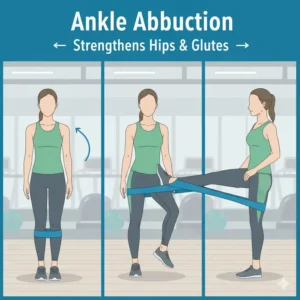
Cable Hip Abduction: Stand sideways to the machine and attach the cuff to your outer ankle. Lift your leg directly out to the side, hitting that glute medius with heavy weight.
-
Cable Hip Adduction: Stand sideways and attach the cuff to your inner ankle. Pull your leg across your body to work your inner thighs.
Table 6: Exercise-to-Goal Matching
| Exercise | Primary Target | Best Band Type |
| Lateral Band Walks | Glute Medius (Side) | Loop (Fabric or Latex) |
| Clamshells | Glute Medius (Side) | Loop (Fabric or Latex) |
| Cable Kickbacks | Glute Maximus (Shelf) | Cuff (Strap) |
| Banded Glute Bridges | Glute Max & Medius | Loop (Fabric) |
| * Cable Hip Abduction | Glute Medius (Side) | Cuff (Strap) |
| Fire Hydrants | Glute Medius & Minimus | Loop (Fabric or Latex) |
Common Mistakes to Avoid When Using Leg Bands Ankle Style
I see these mistakes all the time, and they’re killing your gains.
-
Using Too Much Resistance: Bigger isn’t always better. If you’re using a band so heavy that you have to twist your back or use momentum, you’re not isolating the muscle. Drop the resistance and focus on the squeeze.
-
Bad Form (e.g., Arching Back): During any kickback movement (banded or cable), your core must be tight and your back flat. The second you arch your lower back, you’re just using your spine, not your glutes. This is a fast track to injury.
-
Snapping/Jerking the Band: The magic of an ankle band is time under tension. Control the movement both on the way out (concentric) and on the way back (eccentric). Don’t just let the band snap back.
-
Placing the Band Incorrectly: For lateral walks, placing the band around your ankles is harder than placing it around your knees. Both work, but be consistent. For squats, the band goes just above or just below the knees, not the ankles.
-
Only Using Bands: Ankle resistance bands are a powerful supplement to your routine, not a replacement for heavy compound lifts. For a well-rounded physique, you need both. For more on proper form, check out resources from authorities like the American Council on Exercise (ACE).
Caring for Your Ankel Bands (Yes, ‘ankel’ bands need love too!)
Even though it’s a common typo, “ankel bands” need care! To make them last, follow these simple rules.
Table 7: Ankle Band Maintenance Checklist
| Task | Latex / TPE Bands | Fabric Bands |
| Cleaning | Wipe with a damp cloth. Do NOT use soap, as it degrades the latex. | ✅ Machine Washable! (Cold, gentle) or hand wash with mild soap. |
| Drying | Pat dry with a towel. Air dry. | ✅ Air dry only. Do not put in the dryer, as heat will ruin the elastic. |
| Storage | Store in a cool, dark place (like their bag). Sunlight (UV) will destroy them. | Store anywhere dry. They are much more resilient. |
| Inspection | Before each use, check for small nicks or tears. If you see one, throw it out. | Check for fraying seams, but they are very unlikely to snap. |
Table 8: Cost vs. Benefit Analysis (Budget vs. Premium Bands)
| Tier | Price Range | Products | Who Is It For? |
| Budget | $10 – $20 | Fit Simplify, Generic Cuffs | Beginners, PT patients, or those on a strict budget. The value is undeniable. |
| Mid-Range | $20 – $35 | DMoose, FITGIRL, Arena Strength | The 90% “sweet spot.” You get non-slip fabric or high-comfort, durable cuffs. |
| Premium | $35 – $50+ | TheraBand, Harbinger, GymBros | Professionals, physical therapists, and heavy lifters who need specific, durable, or clinically-trusted gear. |
FAQs: Your Top Questions About Ankle Bands Answered
-
Can ankle bands really grow your glutes?
-
Yes! But you have to be smart. Loop bands are best for activation and sculpting (hypertrophy in the 15-25 rep range). Ankle cuffs on a cable machine are what you use for progressive overload to build serious mass (hypertrophy in the 8-12 rep range). Using both is the ultimate combo.
-
-
How often should I use ankle bands for working out?
-
You can use light loop bands for activation warm-ups (like lateral walks) before every single workout (even upper body) to keep your glutes firing. For heavy, muscle-building workouts (with fabric bands or cuffs), treat it like any other muscle group: 2-3 times per week with rest days in between.
-
-
Are fabric or latex ankle bands better?
-
For glute building, fabric is better. They don’t roll, they offer more resistance, and they’re more comfortable. For rehab and subtle activation, latex is better because it offers lighter, more granular resistance levels.
-
-
Can I use ankle bands if I’m a beginner?
-
Absolutely. In fact, you should. A set of light latex bands (like Fit Simplify) is one of the safest and most effective ways to learn how to properly engage your glutes and hips, which will protect your knees and back when you move on to heavier lifts.
-
🔥 Take the Next Step!
You’ve read the guide, you’ve seen the products, and you know the exercises. Now it’s time to take action. Don’t wait for your glutes to guess how to grow. Tell them what to do.
Click here to browse the top-rated ankle bands on Amazon and start building the lower body you’ve always wanted! 🚀
Conclusion: Are Ankle Bands Your Missing Fitness Link?
After all this, it’s clear: ankle bands are not a gimmick. They are a fundamental tool for building a balanced, strong, and aesthetic lower body.
They bridge the gap that heavy lifting leaves behind, targeting the small, crucial stabilizers that protect your joints and create a 3D, rounded shape.
-
Loop bands are your portable, at-home, activation-driving best friend.
-
Ankle cuffs are your key to unlocking serious strength and size at the gym.
For less than the price of a tub of protein powder, you can buy a tool (or set of tools) that will fundamentally change how your glutes and hips feel and look. The only question left is, which one are you getting?
Frequently Asked Questions
✅ Fabric loop bands like Arena Strength or GymBros are best for glutes. Their non-slip design and heavy resistance are perfect for hip abductions, kickbacks, and glute bridges to build muscle…
✅ Ankle cuffs (straps) connect to cable machines for heavy, linear resistance, ideal for building strength. Loop bands provide elastic resistance and are better for activation, rehab, and at-home workouts…
✅ Beginners should start with a set offering 10-25 lbs (like Fit Simplify). Intermediate users should look for 25-40 lbs. Fabric bands often come in small/medium/heavy sets for progression…
✅ Fabric bands are more durable, washable, and don’t roll up, making them better for glute exercises. Latex bands offer more stretch and granular resistance levels, which can be better for physical therapy…
✅ The DMoose Fitness Ankle Straps are consistently top-rated for gym use. They feature heavy-duty neoprene padding, double D-rings for stability, and a design built to handle heavy cable loads… ❓ What are the best ankle bands for glutes?
❓ Ankle bands for cable machine vs loop bands: what's the difference?
❓ What resistance ankle bands should I buy?
❓ Are fabric ankel bands better than latex?
❓ What are the top rated ankle straps for gym use?
Recommended for You
- 50 lb Resistance Bands: 7 Best Choices Transform Workouts 2025
- Resistance Bands 20 lbs: 7 Top Picks for 2025 for Maximum Training Results
- Resistance Bands 50 lbs: 7 Amazing Picks to Maximize Your Gains
Disclaimer: This article contains affiliate links. If you purchase products through these links, we may earn a small commission at no additional cost to you.
✨ Found this helpful? Share it with your friends! 💬🤗