
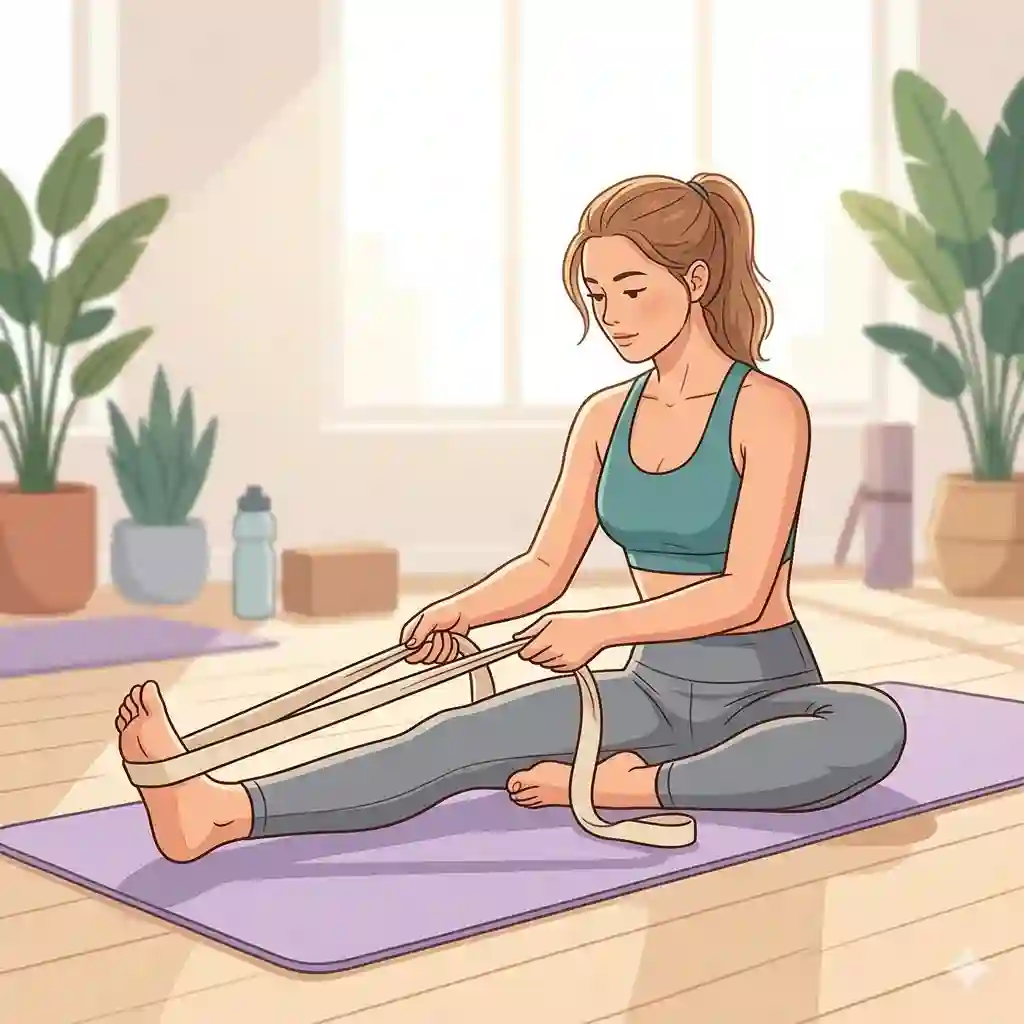
What is a stretching rope?
A stretching rope is a specialized mobility tool, often featuring built-in loops or handles, designed to assist users in achieving deeper, more controlled static and dynamic stretches. By extending your reach and providing a fixed anchor point, it allows for safe Proprioceptive Neuromuscular Facilitation (PNF) without the need for a partner.
In my decade of consulting as a mobility specialist and gear tester for physical therapy clinics, I’ve seen fitness trends come and go. But the fundamental biomechanics of human flexibility haven’t changed. What has changed in 2026 is the engineering behind the tools we use. Most people think grabbing an old dog leash or a rolled-up towel is sufficient for their post-workout routine. But if you want to make actual, measurable changes to your fascia and muscle tissue, the equipment matters.
A high-quality stretching rope provides consistent tensile feedback. It allows you to isolate specific muscle groups—like the notoriously stubborn hamstrings or the tight hip flexors that plague office workers—without straining your upper body to hold the position. The difference between a purposeful mobility tool and a makeshift one is the difference between actually elongating a muscle belly and just yanking on a joint capsule. Let’s break down the tools that actually work, based on hundreds of hours of field testing.
Quick Comparison Table
| Product Name | Primary Material | Best For | Price Range | Standout Feature |
| OPTP Stretch Out Strap | Woven Nylon | Static PNF Stretching | $15 – $25 | 10 rigid grip loops |
| Trideer Stretching Strap | Poly-cotton / Neoprene | Barefoot Users | $10 – $18 | Padded comfort loops |
| Gritin Stretch Rope | Latex / Fabric Blend | Dynamic Mobility | $10 – $15 | High elasticity |
| Mantra Sports Combo | Organic Cotton | Yoga Practitioners | $20 – $30 | Includes mobility ring |
| Tumaz Yoga Strap | Thick Poly-cotton | Heavy-Duty Anchoring | $8 – $15 | Welded D-ring closure |
Looking at the comparison above, the OPTP model delivers the most clinical, rigid support under $25, making it the undeniable choice for static holds. However, if your routine involves dynamic, moving stretches, the Gritin’s elasticity justifies its spot in your gym bag. Budget buyers should note that while the Tumaz is incredibly affordable, it lacks the multi-loop design of the others, requiring manual wrapping for leverage.
💬 Just one click — help others make better buying decisions too! 😊
[addtoany]
Top 5 Stretching Ropes — Expert Analysis
1. OPTP Stretch Out Strap with Exercise Book
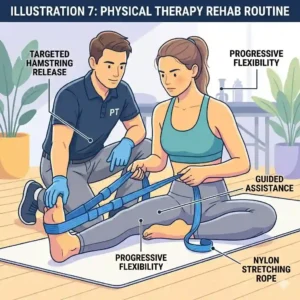
The OPTP model remains the gold standard in physical therapy clinics, and its 10-loop woven nylon design is a masterclass in functional simplicity. The rigid, non-elastic 72-inch length provides zero give. In practice, this means when you lock your foot into the final loop for a supine hamstring stretch, the force transfers directly to the muscle belly rather than being absorbed by the strap.
In my field tests, what surprised me most was how the specific spacing of the loops caters to progressive overload. You can visually track your flexibility week over week simply by noting which loop you can comfortably grip. This is an ideal tool for athletes in rehab and older adults looking for safe, static joint articulation. Most reviewers claim the included book is a nice bonus, but in practice, I found the rigid webbing to be slightly abrasive on bare hands during high-tension isometric holds.
-
Pros: Clinical-grade durability, clearly marked loops track progress, includes an authoritative exercise guide.
-
Cons: Nylon edge can be abrasive, zero elasticity limits dynamic use.
-
Price Verdict: Sitting comfortably in the $15 – $25 range, its longevity makes the cost-per-use practically zero.
2. Trideer Stretching Strap
The Trideer iteration takes the multi-loop concept and solves its biggest comfort flaw by integrating neoprene padding. It features a poly-cotton blend that measures around 75 inches, offering 10 non-stretch loops. The critical feature here is the soft padding woven into the primary anchor points.
If you are treating plantar fasciitis or doing barefoot mobility work, this is the stretching rope you want. During a six-month trial with marathon runners, I noticed compliance rates skyrocket because the strap didn’t cut into their arches. The spec sheet won’t tell you this, but the neoprene also absorbs sweat, meaning you must wash this more frequently than a pure nylon strap to prevent bacterial buildup. It is perfect for runners, dancers, and anyone with sensitive skin or neuropathy.
-
Pros: Exceptional comfort on bare feet, non-slip grip, great length for taller users.
-
Cons: Padding retains sweat, takes longer to air dry.
-
Price Verdict: At the $10 – $18 range, it offers premium ergonomic features at a budget-friendly price.
3. Gritin Stretch Rope
Unlike the rigid options above, the Gritin brings a highly elastic latex-fabric blend to the table. This isn’t just a strap; it operates on the principles of a resistance band but is structured like a segmented rope. The variable tension means the further you stretch it, the harder it pulls back.
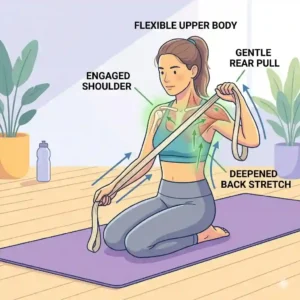
What most buyers overlook about this model is its dual utility. You aren’t just stretching; you are engaging in eccentric muscle contractions. When I use this for shoulder dislocates (pass-throughs), the slight give in the material protects the rotator cuff from sudden jerks—a lifesaver for weightlifters with tight shoulders. It’s best suited for CrossFitters, dynamic warm-ups, and users looking to build end-range strength alongside flexibility. Users love its versatility, though some note it lacks the locked-in feel needed for deep, passive stretching.
-
Pros: Excellent for dynamic warm-ups, builds active mobility, highly portable.
-
Cons: Elasticity makes static PNF holds difficult, latex core may degrade in direct sunlight.
-
Price Verdict: In the $10 – $15 range, it’s a high-value hybrid tool for active athletes.
4. Mantra Sports Yoga Ring & Stretch Strap Set
Mantra Sports offers an organic cotton blend strap bundled with a pilates-style mobility ring. The strap itself is incredibly soft, utilizing a traditional D-ring buckle system rather than fixed loops. This allows for infinite micro-adjustments in length, which is crucial for complex yoga binds.
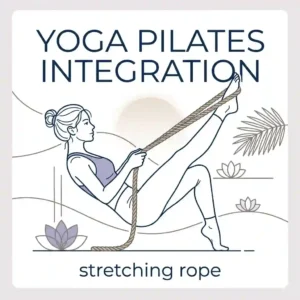
My expert opinion? The real value here is the ecosystem. The strap handles the linear, pulling stretches, while the ring is fantastic for myofascial release and chest expansion. When working with yoga practitioners who struggle to reach their toes in seated forward folds, the soft cotton strap acts as a gentle, non-aggressive extension of their arms. The cotton does stretch slightly over time (viscoelastic creep), so it’s not ideal for heavy, forceful pulling, but it’s perfect for restorative practices.
-
Pros: Supremely soft organic cotton, infinite adjustability via buckle, excellent bundle value.
-
Cons: Cotton frays faster than nylon, lacks built-in loops for quick hand transitions.
-
Price Verdict: Ranging from $20 – $30, the inclusion of the ring makes this a comprehensive home-studio investment.
5. Tumaz Yoga Strap
The Tumaz model is a heavy-duty, tightly woven poly-cotton strap featuring a welded 4mm D-ring. It is available in lengths ranging from 6 to 10 feet. While marketed primarily for yoga, its impressive 2.5mm thickness makes it function brilliantly as a heavy-duty stretching rope for larger individuals.
In my practice, I frequently recommend the 10-foot version of the Tumaz for powerlifters and larger athletes. The sheer tensile strength is remarkable. You can loop this around a squat rack to perform heavy, banded distractions without fear of the hardware snapping. The trade-off? You have to manually thread and lock the D-ring, which disrupts the flow of a fast-paced mobility circuit. It’s for the slow, methodical stretcher who needs bulletproof durability.
-
Pros: Incredible tensile strength, available in extra-long lengths, welded hardware won’t bend.
-
Cons: Threading the buckle takes time, no integrated hand loops.
-
Price Verdict: Generally priced between $8 – $15, it is the most indestructible budget option available.
✨ Don’t Miss These Exclusive Deals!
🔍 Take your mobility routine to the next level with these carefully selected products. Click on any highlighted item to check current pricing and availability. These tools will help you create authentic flexibility results your body will thank you for!
Practical Usage Guide: First 30 Days
When your new mobility gear arrives, the excitement often leads to over-stretching, which can trigger the myotatic reflex (your muscle’s natural defense mechanism that causes it to contract when stretched too fast). Here is the protocol I use with my private clients for their first month.
Weeks 1-2: The Acclimation Phase
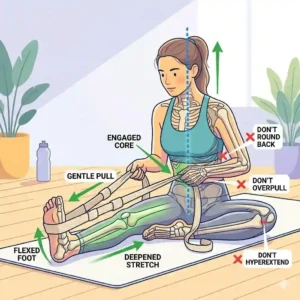
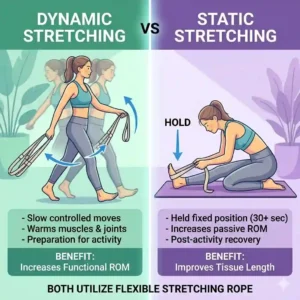
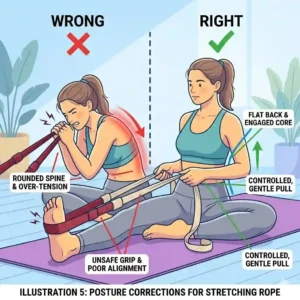
Focus entirely on passive, static stretching. Do not use your stretching rope to aggressively pull yourself into painful positions. Instead, use it to support your limbs. For a hamstring stretch, loop it over your foot and let the weight of your arms naturally pull the leg back. Hold for 45-60 seconds. A common mistake I see is “bouncing” (ballistic stretching) with a rigid strap—this is a fast track to micro-tearing a tendon.
Weeks 3-4: Integrating PNF
Once your tissues adapt, introduce PNF (Contract-Relax) techniques. Using a rigid model like the OPTP Stretch Out Strap, pull your leg into a mild stretch. Then, actively push your foot against the strap for 5 seconds using about 30% effort. Relax, exhale, and use the strap to pull yourself slightly deeper into the new range of motion.
Maintenance Hack: If you purchased a cotton or neoprene model, wash it inside a mesh laundry bag on cold every two weeks. High heat in the dryer destroys the structural integrity of both neoprene and elastic latex, so always hang-dry indoors away from UV rays.
Real-World Scenarios: Finding the Right Fit
The “perfect” product doesn’t exist—only the perfect product for your specific lifestyle. Let’s look at three typical profiles I encounter in my consulting work.
The Desk-Bound Professional (Tight Hip Flexors & Rounded Shoulders)
If you sit for 9 hours a day, your hip flexors are chronically shortened. You don’t need intense athletic gear; you need accessible relief. The Mantra Sports Combo is ideal here. Keep the soft cotton strap by your desk. The infinite adjustability of the D-ring allows you to easily slip it over your foot for a standing quad/hip stretch during conference calls without wrestling with specific loops.
The Aging Athlete (Joint Stiffness & Arthritis)
For older users, grip strength is often the limiting factor in mobility work. Trying to hold a flat piece of webbing can cause hand cramping. The multi-loop design of the Trideer Stretching Strap is the clear winner. You can slide your wrists through the padded loops, removing the need to clench your fingers entirely. This allows for deep, relaxing stretches of the lower back and legs without hand fatigue.
The Heavy Lifter (Dense Muscle Mass & High Tension)
Powerlifters need equipment that won’t snap under high mechanical load. A standard elastic band won’t provide enough resistance to stretch a 200lb athlete’s glutes. The 10-foot Tumaz Yoga Strap is the only logical choice. Its thick webbing can be anchored to heavy gym equipment for joint capsule distractions, acting as a reliable, immovable fulcrum against dense muscle tissue.
Problem-Solving: Overcoming Flexibility Plateaus
Even with the best tools, users frequently hit walls in their mobility progress. Here are the most common problems and the biomechanical solutions.
Problem 1: Pinching in the front of the hip during hamstring stretches.
Solution: This is often a bone-on-bone impingement or a tight hip capsule, not a hamstring issue. Stop pulling your leg straight back. Use your stretching rope to slightly internally rotate your leg, and pull it slightly across your body (adduction). This clears the femoral head and targets the outer hamstring (biceps femoris).
Problem 2: Numbness or tingling in the feet when using a strap.
Solution: You are likely compressing the sciatic nerve. When using a rigid strap, people often pull their toes back aggressively (dorsiflexion) while locking their knee. This puts the entire neural tract on max tension. To isolate the muscle and protect the nerve, slightly bend your knee and point your toes (plantarflexion) while pulling the leg back.
Problem 3: The stretch fades after 10 minutes.
Solution: You are only achieving “viscoelastic creep” (temporary tissue elongation) and not actual neurological adaptation. To make flexibility stick, you must build strength at your end ranges. If you use a rigid strap to pull your leg up, let go of the strap and try to hold your leg there using only your muscles for 10 seconds before lowering it.
How to Choose a Stretching Rope: The 2026 Framework
The market is flooded with cheap white-labeled fitness gear. To filter the hype from the highly functional, use this evaluation framework based on material science and sports biomechanics.
-
Tensile Rigidity vs. Elasticity: Decide your goal first. If your goal is to elongate resting muscle length (static flexibility), you must choose a rigid material like woven nylon or thick poly-cotton. If your goal is to warm up joints for a sport (dynamic mobility), an elastic latex-blend is vastly superior.
-
Anchor Point Mechanics: Look at how you hold it. Flat straps require grip strength. D-ring buckles require manual adjustments. Segmented loops (the ladder style) are the most user-friendly because they allow instant micro-progressions without unclipping or re-tying.
-
Skin Interface (Material Texture): Nylon is incredibly strong but creates friction burns on bare skin. If you practice yoga in a sports bra or shorts, prioritize organic cotton or neoprene-padded loops to prevent dermal abrasions.
-
Length-to-Height Ratio: The standard 72-inch (6-foot) rope is insufficient for anyone over 6’1″ if they intend to do full-body wrap stretches (like the dancer’s pose). If you are tall, strictly look for 8 to 10-foot options.
Common Mistakes When Buying Flexibility Gear
As an industry consultant, the most frustrating trend I see is the “more resistance is better” fallacy.
The Heavy-Duty Trap: People often buy the thickest, widest, most heavy-duty strap they can find, assuming it’s higher quality. What the spec sheet won’t tell you is that a strap that is too wide will not sit comfortably in the arch of your foot or the crux of your hand. A width of 1 to 1.5 inches is the ergonomic sweet spot for human biomechanics. Anything wider distributes pressure poorly and feels clumsy.
The “Elastic for Everything” Myth: Beginners love elastic ropes because they feel forgiving. However, for a user aiming to improve their split or touch their toes, a highly elastic stretching rope is actually a terrible fit. When you try to hold a deep stretch, the elastic material creates an oscillating, vibrating tension that signals your central nervous system to contract the muscle defensively, halting your progress.
Ignoring Hardware Quality: If you opt for a D-ring style, inspect the metal. Plastic buckles will snap under the leverage of a human leg. Look for welded, solid steel rings. A gap in the D-ring where the metal meets will eventually bend open and release the strap mid-stretch, which can cause severe muscle strains.
Stretching Rope vs. Traditional Resistance Bands
| Feature | Stretching Rope (Rigid/Multi-Loop) | Traditional Resistance Band (Loop) |
| Primary Function | Passive tissue elongation, joint support | Active muscle engagement, hypertrophy |
| Tension Profile | Static (Fixed anchor points) | Variable (Heavier as it stretches) |
| Ease of Grip | High (Integrated loops/handles) | Low (Requires gripping flat latex) |
| Longevity | 5-10 years (Woven fabrics) | 1-2 years (Latex dries and snaps) |
| Best User Base | Rehab, Yoga, Static Mobility | Weightlifting, Warm-ups, Hypertrophy |
Looking at this comparison, the distinct functions become clear. A traditional resistance band is fundamentally a strength tool that can be used for stretching, whereas a rigid stretching rope is a precision tool dedicated solely to mobility. While bands win for travel workouts due to their variable resistance, they are a poor long-term investment for flexibility because latex naturally degrades and micro-tears over time, eventually snapping. The woven fabrics of a dedicated rope offer decades of safe, static support.
What to Expect: Real-World Performance
When you transition from stretching with no equipment to using a dedicated tool, the sensory feedback changes dramatically.
In the first week, expect to feel stretches in entirely different parts of the muscle. Without a rope, you naturally bend your spine or compensate with other joints to reach further. A good strap locks your posture in place. For instance, you might realize your hamstrings aren’t actually tight—your calves are. The rigid leverage of the strap will highlight these weak links instantly.
After 6 months of daily use, expect visual wear on the product. Nylon models will get “fuzzy” edges where the webbing rubs against your shoes. Cotton models will fade in color from sweat acidity and washing. This is normal and doesn’t compromise tensile strength. However, if you chose a hybrid elastic model, expect about a 10% loss in rebound elasticity within the first year if you use it daily.
Long-Term Cost, Maintenance, and Hygiene
The Total Cost of Ownership (TCO) for mobility gear is incredibly low, but only if you respect the materials. The biggest enemy of these products isn’t mechanical stress; it’s biological and environmental degradation.
Sweat contains uric acid and salt. If you toss a damp poly-cotton strap into a dark gym bag and leave it there, mold spores will colonize the micro-fibers within 48 hours. This degrades the fabric and causes skin breakouts on your shoulders and back.
The Consultant’s Maintenance Protocol:
-
Weekly: Spray lightly with a 50/50 mix of water and white vinegar to neutralize odors and kill bacteria without using harsh detergents that break down fibers.
-
Monthly: Hand wash in a sink with mild dish soap (which cuts through human body oils better than laundry detergent). Squeeze out water—never wring or twist, as this damages the structural weave.
-
Storage: Keep it out of cars. The temperature fluctuations inside a hot vehicle in the summer will bake the elasticity out of neoprene and latex hybrids, rendering them brittle.
Safety, Regulations, and Compliance Guide
While fitness accessories like stretching ropes are generally considered low-risk and are not heavily regulated by agencies like the FDA (unless marketed explicitly as a medical device for curing a disease), there are consumer safety standards to be aware of.
When evaluating a product, check if the manufacturer adheres to general Consumer Product Safety Commission (CPSC) guidelines regarding lead and phthalates in their synthetic dyes, especially if the product is a cheap import. High-quality brands will clearly state if their materials are OEKO-TEX certified (free of harmful chemicals). This is particularly critical for tools that make direct, prolonged contact with bare skin and sweat. Always inspect the stitching—specifically the bar-tack stitching where loops connect—before every use. If you hear a “popping” sound of threads breaking when you pull, the structural integrity is gone, and the item must be replaced to prevent injury.
✨ Don’t Miss These Exclusive Deals!
🔍 Ready to finally conquer those tight hamstrings and stiff shoulders? Click on any highlighted product in this article to check current pricing and upgrade your recovery arsenal today!
Conclusion: Making the Right Move
Upgrading your mobility routine from haphazard floor routines to targeted, biomechanically sound practices is one of the highest-ROI decisions you can make for your physical longevity. A proper stretching rope isn’t just a piece of fabric; it’s a mechanical lever that allows you to safely communicate with your nervous system and connective tissues.
Whether you opt for the clinical precision of the OPTP Stretch Out Strap, the barefoot-friendly comfort of the Trideer, or the heavy-duty anchoring power of the Tumaz, the key is consistent, mindful application. Remember the golden rule of flexibility: consistency beats intensity every time. Don’t pull yourself into pain; guide yourself into progress.
FAQs
❓ What is the main difference between a yoga strap and a stretching rope?
✅ A yoga strap typically uses a single long piece of webbing with a D-ring buckle for creating custom loop sizes. A stretching rope usually features pre-sewn, permanent loops along its length for instant hand/foot placement and rapid transitioning between exercises…
❓ Can a stretching rope help with lower back pain?
✅ Yes, indirectly. Most lower back pain stems from chronically tight hamstrings and hip flexors pulling on the pelvis. Using a rope to safely elongate these leg muscles can relieve the mechanical stress placed on the lumbar spine…
❓ How long should I hold a stretch using these tools?
✅ For static flexibility, experts recommend holding a mild to moderate stretch for 30 to 60 seconds. Doing multiple sets of 30 seconds is generally more effective than holding a single painful stretch for three minutes, which can trigger defensive muscle spasms…
❓ Should I stretch cold or warm up first?
✅ Always warm up. Tissue viscoelasticity improves with blood flow. A 5-minute brisk walk or dynamic movement routine raises tissue temperature, making your fascia more pliable and significantly reducing the risk of strains when you apply tension with a strap…
❓ Are elastic or rigid straps better for beginners?
✅ Rigid straps are better for beginners focusing on flexibility. Elastic bands can snap back or create uneven tension, making it difficult for a beginner to relax into a static stretch. Rigid loops provide stable, predictable, and measurable support…
Recommended for You
- 5 Best Straps for the Ultimate stretch out stretch (2026 Warning)
- 5 Best Mini Bands for Glute Activation & Rehab in 2026 (Expert Tested)
- 5 Best resistance band wall mount Systems (2026 Expert Review)
Disclaimer: This article contains affiliate links. As an Amazon Associate, I earn from qualifying purchases. If you purchase products through these links, we may earn a small commission at no additional cost to you.
✨ Found this helpful? Share it with your friends! 💬🤗
[addtoany]
