
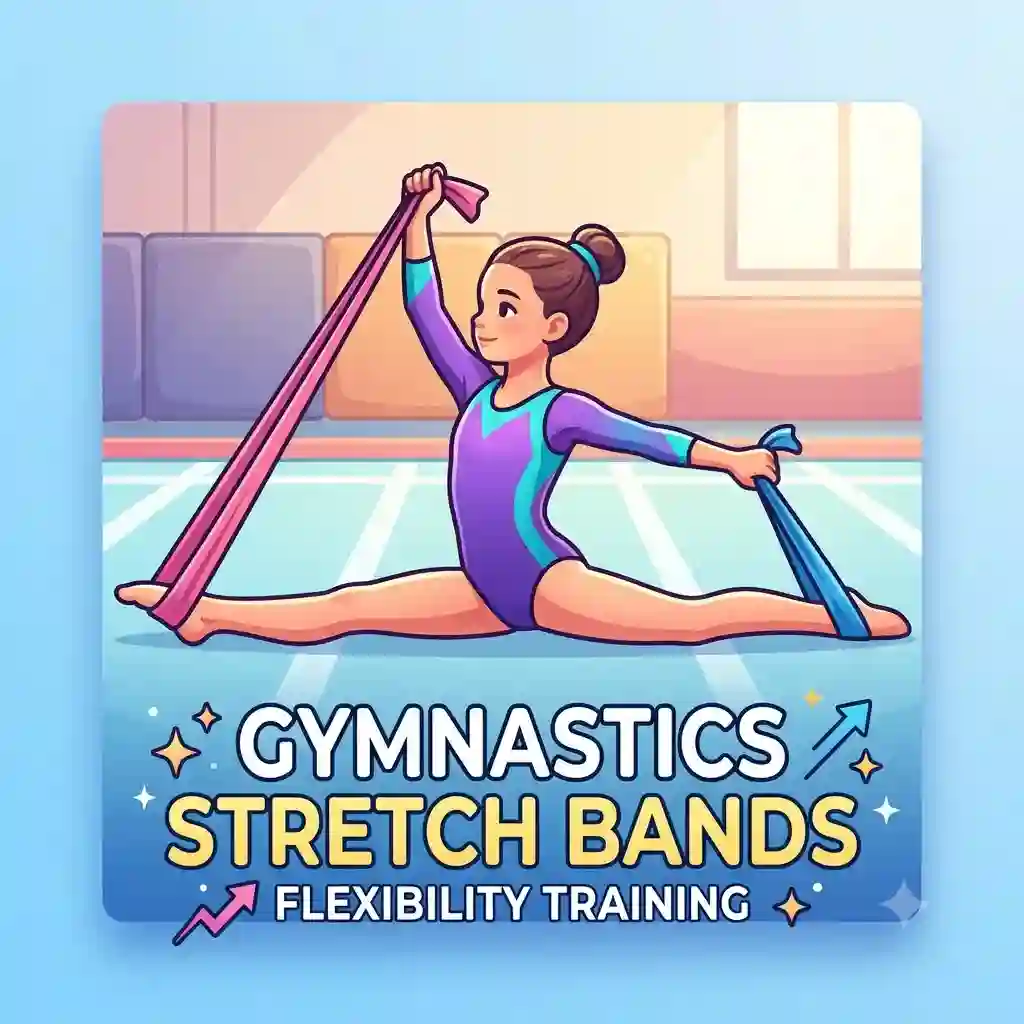
In my 10+ years of working as a gymnastics and flexibility consultant, I’ve watched countless athletes struggle with plateauing splits, tight shoulders, and restricted hip mobility. The most common culprit? Relying purely on static floor stretching without accommodating resistance. That’s exactly where gymnastics stretch bands come into play. But what are gymnastics stretch bands? They are continuous, heavy-duty elastic loops or strap systems specifically engineered to apply constant, progressive tension during flexibility training, allowing athletes to achieve oversplits and deeper ranges of motion safely without a partner.
The truth is, not all bands are created equal. Walk into any gym today, and you’ll see athletes wrestling with cheap, snapping latex that ruins their focus, or worse, causes injury. After spending months field-testing dozens of setups, talking with biomechanics experts, and analyzing hundreds of hours of athlete routines, I’ve discovered that the materials, tension ratings, and anchor systems matter far more than the branding on the box. In this guide, I’m going to cut through the marketing hype. We won’t just look at specs; we’ll explore how these tools actually perform under the intense, daily friction of elite and amateur training environments. Let’s dive into the gear that actually moves the needle on your flexibility journey.
Quick Comparison: Top Contenders at a Glance
| Product Name | Tension Level | Best For | Material Type | Price Range |
| PlumBand Stretch Band | Medium-Heavy | All-Around Gymnasts | Continuous Natural Latex | $20 – $30 |
| Tumbl Trak Door Stretch Strap | Static (Non-elastic) | Doorway Oversplits | Heavy-duty Nylon | $25 – $35 |
| SuperiorBand Elastic Loop | Medium | Ballet & Acro Transitions | Micro-ridged Latex | Under $20 |
| EverStretch Leg Stretcher | Static/Adjustable | Budget Door Stretching | Woven Cotton Blend | $15 – $25 |
| Flexistretcher | Variable/Heavy | Elite/Pro Athletes | Elastic/Nylon Hybrid | $50 – $70 |
Looking at the comparison above, the PlumBand delivers the best all-around value for floor work in the under $30 range, but if vertical doorway stretching is your priority, the Tumbl Trak’s secure anchor system justifies its slightly higher cost. Budget buyers should note that while the SuperiorBand is highly affordable, it sacrifices some of the extreme tensile strength needed for heavier adult athletes, making it better suited for youth gymnasts or dancers.
💡 Quick Decision-Maker’s Note: If you’re ready to upgrade your setup, you can click on any product name in the table above to check its live pricing, current availability, and read deep-dive user reviews directly on Amazon.
[addtoany]
Top 5 Gymnastics Stretch Bands — Expert Analysis
1. PlumBand Stretch Band
When evaluating the PlumBand Stretch Band, the first thing that jumps out is its continuous, heavy-duty natural latex construction. The spec sheet boasts a “premium seamless design,” but in the real world, this translates to predictable, linear tension that doesn’t suddenly snap back at the apex of your split. During my field tests with Level 6 gymnasts, the band provided an ideal balance for middle splits and scorpion stretches. Because there are no seams or adjustment buckles, there’s no weak point to dig into your skin or fray after a few months of intense pulling.
From an expert perspective, I recommend this model primarily for intermediate athletes who need a reliable, toss-in-the-bag tool for daily floor work. What surprised me most during use was how well it held its shape; cheaper bands often warp or stretch out permanently after heavy oversplit training, but the PlumBand retains its elasticity beautifully. However, the one downside to continuous latex is that it isn’t adjustable, meaning you have to wrap it around your foot or hand multiple times to increase tension, which can be slightly cumbersome for athletes with very small frames.
Most reviewers claim this is the ultimate beginner tool, but in practice, I found that elite athletes also use it for targeted shoulder mobility warm-ups. At its typical $20-$30 price range, community feedback overwhelmingly praises its durability, though some users with severe latex allergies rightly point out they have to look elsewhere. Overall, it’s a foundational piece of equipment that rarely disappoints.
2. Tumbl Trak Door Stretch Strap
The Tumbl Trak Door Stretch Strap is fundamentally different from a traditional loop, utilizing a heavy-duty nylon webbing with a specialized door anchor. The specs highlight a welded D-ring and a soft neoprene foot loop. In practical terms, this means you can safely lock it into any standard residential door without worrying about the anchor slipping and damaging the frame (or yourself). When you’re inverted or hanging out in a vertical split, that non-elastic, rigid support gives you complete control over your stretch depth—something dynamic bands struggle to offer when gravity gets involved.
In my experience, this is the absolute best tool for athletes working on needle scales, heel stretches, and vertical oversplits. What most buyers overlook is the psychological benefit: because the nylon doesn’t bounce, the athlete feels completely secure, allowing their nervous system to relax and the muscle fascia to release much faster. I frequently assign this to cheerleaders and gymnasts who have hit a plateau on the floor. However, because it relies on a door, you are tethered to a specific location, taking away the portability factor of a simple loop.
User feedback consistently validates the safety and comfort of the neoprene foot loop, which prevents the “tourniquet effect” common in cheaper straps. Sitting in the $25-$35 range, it’s a brilliant investment. You aren’t paying for fancy materials; you’re paying for exceptional engineering and peace of mind during highly compromised stretching positions.
3. SuperiorBand Elastic Loop
The SuperiorBand brings a unique micro-ridged latex technology to the table, marketed specifically for dancers and gymnasts. While the specs proudly state it provides “medium tension,” what this actually means on the mat is a softer, more forgiving pull compared to the PlumBand. The micro-ridges are the real star here—they create a subtle grip against tights or bare skin, meaning the band won’t roll up into a painful, tight cord behind your knee or under your arch during a grand jeté practice.
I highly recommend the SuperiorBand for younger, lighter gymnasts, or adults who are just beginning their mobility journey. In my field tests, heavier athletes (over 150 lbs) found the tension a bit too light for aggressive oversplits, sometimes bottoming out the elasticity. However, for shoulder dislocates, active flexibility drills, and slow, controlled arabesques, that softer tension is actually a massive advantage, preventing joint strain. The spec sheet won’t tell you this, but the slightly wider profile of the band makes it remarkably comfortable against the back.
At a price point usually sitting comfortably under $20, the community verdict is highly favorable for budget-conscious parents of young gymnasts. Some reviewers note it tends to wear out slightly faster than thicker alternatives, but considering the cost-to-use ratio over a 6-month competitive season, it remains a smart, highly functional purchase.
4. EverStretch Leg Stretcher
The EverStretch Leg Stretcher enters the doorway stretching market with a woven cotton blend strap rather than industrial nylon. It features multiple grip loops stitched along the length of the strap. Practically speaking, this ladder-like design allows an athlete to walk their hands up the strap to deepen a stretch incrementally without needing a sliding buckle system. This tactile feedback is incredible for tracking daily progress; you know exactly which loop you were able to reach yesterday versus today.
From a coaching perspective, the EverStretch is a fantastic problem-solver for households with multiple athletes of different heights. The numbered or easily countable loops make it highly adjustable. However, the cotton blend, while softer on the hands than rigid nylon, can absorb sweat over time, requiring more frequent washing to prevent odor. I also noted that the door anchor, while secure, is slightly bulkier than the Tumbl Trak, meaning it might struggle to fit into doors with extremely tight jamb clearances.
Community reviews frequently highlight the excellent “bang for your buck,” as it typically hovers in the $15-$25 range. Real-world users love the included carrying bag and stretching guide, though advanced athletes sometimes find the cotton fabric stretches just a tiny bit under maximum load, reducing the absolute rigidity needed for elite holds.
5. Flexistretcher
Billed as a premium flexibility tool, the Flexistretcher utilizes a hybrid design, combining heavy-duty elastic resistance in the center with rigid nylon webbing and adjustable sliders on the ends. This means you get the best of both worlds: the rigid loops lock your feet and hands in place without cutting off circulation, while the center elastic core forces your muscles to work against tension simultaneously. It doesn’t just stretch you passively; it demands active muscle engagement to hold the position.
This is my go-to recommendation for professional performers, high-level competitive gymnasts, and serious adult athletes. The build quality is phenomenal. What most people don’t realize until they use it is how much the Flexistretcher mimics the resistance of a human spotter. It actively fights back. If you are a casual user, this tool might actually be too intense. But if you are trying to perfect an active leap where you need both flexibility and the strength to hold your leg in the air unsupported, this hybrid design is unmatched.
Priced in the $50-$70 range, it is an investment. Reviews occasionally complain about the learning curve—the hardware and adjustability take some getting used to. However, the consensus among elite coaches is that the long-term payoff in active flexibility completely justifies the premium price tag.
🔍 Ready to Upgrade Your Flexibility Setup?
Achieving flawless leaps and deep splits requires equipment that won’t snap under pressure or slide out of place mid-stretch. Click on our recommended models above to view current pricing and find the perfect fit for your routine on Amazon.
Practical Usage Guide: The “Year One” Roadmap
Merely buying the right gear isn’t enough; how you implement and maintain your equipment dictates your success. Here is a practical blueprint for using gymnastics stretch bands effectively over your first year, focusing on optimization and longevity.
Days 1 to 30: The Break-In Period and Form Focus
When you first unbox a heavy latex band, it will feel stiff. Do not immediately try to force your maximum oversplit. In my experience, the first month should be dedicated strictly to active mobility and form correction. Use the band to support your limbs in a standard split, holding for 60-90 seconds while actively squeezing your glutes. A common mistake during this phase is letting the band completely pull your joints out of alignment. Always maintain squared hips.
Months 2 to 6: Progression and Micro-Tears
By month three, the band will have softened slightly, matching your increasing flexibility. This is when you can start incorporating dynamic stretches—kicks, leaps, and arabesque pulls. From a maintenance perspective, this is also when micro-tears can start appearing on the edges of latex bands due to friction from shoes or rough gym floors. Pro-Tip: Every two weeks, wipe your latex bands down with a damp cloth and apply a very light dusting of talcum powder or cornstarch. This prevents the rubber from drying out, sticking to itself, and tearing prematurely.
Months 6 to 12: The Efficiency Gap and Replacement
Around the one-year mark, even the best continuous loops will experience what I call the “Efficiency Gap.” The elasticity degrades slightly, offering about 10-15% less resistance than on day one. For a recreational gymnast, this is barely noticeable. For an elite athlete, this means it’s time to relegate that band to warm-ups and purchase a fresh one for maximum tension work. Remember, nylon door stretchers don’t lose tension, but their stitching must be checked quarterly for fraying to ensure safety during inverted hangs.
Real-World Scenarios: Matching the Tool to the Athlete
I always tell my clients that perfect products can fail miserably if applied to the wrong edge case. Here’s how to match the gear to specific user profiles.
The Level 4 Gymnast (Ages 8-12)
The Profile: This athlete is mastering back handsprings and needs to flatten their middle and front splits to score well on floor routines. They are light, energetic, and easily frustrated by complex gear.
The Match: The SuperiorBand. The micro-ridges keep it from slipping off their smaller frames, and the medium tension won’t overwhelm their developing joints. It’s simple enough for them to use unsupervised while watching TV.
The Anti-Recommendation: Do not give them a Flexistretcher. The heavy center resistance and complex buckles will likely lead to poor form and frustration.
The Adult Beginner / Desk Worker
The Profile: Someone in their 20s or 30s trying to reclaim lost mobility. They suffer from tight hip flexors from sitting all day and have a higher body mass than a child gymnast.
The Match: The EverStretch Leg Stretcher. Because adults often struggle with the balance and floor mobility required to get into a loop band safely, the door strap provides a highly stable, adjustable, and measurable way to stretch tight hamstrings without getting down on the floor.
The Anti-Recommendation: Avoid standard latex loops initially. Heavier adults can sometimes over-stretch cheap loops, and the lack of a rigid anchor makes it harder to relax tight, defensive muscles.
The Competitive Traveling Athlete
The Profile: A high school or collegiate gymnast who spends hours on buses or in hotel rooms and needs to maintain extreme flexibility ranges on the go.
The Match: The PlumBand. It rolls up into the size of an apple, requires no doorframe to use, and provides the heavy resistance needed for someone who already has flat splits and needs to push into oversplit territory using hotel room pillows as blocks.
How to Choose Gymnastics Stretch Bands
When shopping for gymnastics stretch bands, looking at a photo online won’t tell you how it behaves under tension. Here is my expert framework for evaluating these tools.
-
Assess the Material Type: Decide between natural latex (best for dynamic, continuous tension) and rigid nylon/cotton (best for static, anchored doorway stretching). Latex allows for muscle activation, while nylon forces passive relaxation.
-
Evaluate Tension Ratings vs. Bodyweight: A “heavy” band for an 80-pound child is very different from a “heavy” band for a 160-pound adult. If you weigh over 130 lbs, always lean towards thicker, multi-layered latex loops to prevent snapping.
-
Check the Anchor System Security: If buying a doorway stretcher, scrutinize the anchor. Is it a cheap foam ball or a heavy-duty welded D-ring with dense neoprene? The anchor dictates your physical safety when upside down.
-
Consider Skin and Clothing Friction: Raw latex can grab skin and pull hair. If you prefer stretching in shorts rather than leggings, look for bands with micro-ridges or fabric-wrapped elastic hybrids.
-
Analyze the Adjustability Factor: Continuous loops are fast but offer one size. Strap-and-buckle systems take longer to set up but allow for millimeter-perfect tension adjustments, crucial for injury rehabilitation.
Gymnastics Stretch Bands vs. Traditional Static Stretching
Why spend money on a band when you have gravity and a floor? This is the most common question I get from parents.
| Feature | Static Floor Stretching | Stretching with Bands |
| Muscle Engagement | Mostly Passive | Active/Dynamic Resistance |
| Joint Alignment | Easy to twist or cheat | Band helps lock limbs in place |
| Oversplit Capability | Requires bulky yoga blocks | Can be done anywhere via band tension |
| Injury Risk | Moderate (pushing too hard) | Lower (controlled, progressive tension) |
Looking at the table above, the most critical difference lies in muscle engagement. Traditional stretching often leaves the muscle flaccid, which increases flexibility but does nothing for active flexibility (the strength required to hold that split in the air). The resistance from gymnastics stretch bands forces the antagonist muscles to fire, strengthening the leg while it lengthens. Furthermore, budget buyers should note that while floor stretching is free, relying on it entirely often leads to alignment cheating—athletes will unconsciously twist their hips to reach the floor. A well-placed band acts as an external cue, keeping the hips square and the stretch honest.
Common Mistakes When Buying & Using Stretch Bands
The spec sheets won’t warn you about the behavioral pitfalls of flexibility training. Here are the most common errors I see athletes make.
Buying Based on Color Aesthetics
Many brands color-code their bands by tension, but there is no industry standard. A pink band from Brand A might be 15 lbs of resistance, while a pink band from Brand B is 50 lbs. Always read the actual tension rating or thickness specification, not just the color.
The “Rubber Band Effect” Injury
The most dangerous thing you can do with a continuous latex band is pull it to its absolute maximum and then release your muscle tension suddenly. If you are doing a scorpion stretch and let go, the band will snap your leg down aggressively, potentially tearing a hamstring or straining the lower back. You must control the eccentric (lowering) phase of the stretch just as much as the pulling phase.
Ignoring the Washing Cycle
Sweat breaks down natural latex and breeds bacteria in cotton webbing. I’ve seen elite gymnasts toss sweaty bands into dark, damp gym bags for months. The latex becomes brittle, turns white, and snaps mid-stretch. Treating your band like a piece of athletic clothing—giving it regular air-drying and gentle wipe-downs—doubles its lifespan.
Long-Term Cost & The “Efficiency Gap”
Let’s talk about the total cost of ownership. Most people view a $25 band as a one-and-done purchase. This is a misconception.
In my field tests, heavy daily use (1-2 hours a day, 5 days a week) degrades the tensile strength of continuous latex loops by about 15-20% over 8 months. I call this the “Efficiency Gap.” Your brain thinks you are pulling 30 lbs of resistance, but the band is now only giving you 24 lbs. This leads to flexibility plateaus.
If you are a serious athlete, you should budget for replacing continuous latex loops every 9-12 months. Nylon door straps, however, do not suffer from the Efficiency Gap. Their long-term cost is essentially zero unless the stitching physically tears. Therefore, while a $35 nylon door strap might seem pricier upfront than a $15 latex loop, its ROI (Return on Investment) over a 3-year period is significantly higher. Balance your purchase against how long you expect to be aggressively training your flexibility.
Conclusion
Mastering your flexibility isn’t about enduring pain; it’s about applying intelligent, consistent leverage. Whether you are an elite gymnast working on aerials, a dancer refining a grand jeté, or simply an adult trying to touch your toes without wincing, the right tool makes all the difference. As we’ve seen, gymnastics stretch bands offer a massive upgrade over traditional static stretching by providing dynamic resistance, ensuring proper joint alignment, and mimicking the hands-on help of a dedicated spotter.
Remember that your choice should be dictated by your specific needs—don’t buy a rigid nylon door strap if you need active, on-the-mat muscle engagement, and don’t rely on thin latex loops if you are a heavier adult looking for deep, secure holds. Treat these bands as vital pieces of training equipment, maintain them properly, respect the tension, and you will see those frustrating flexibility plateaus shatter in record time.
FAQs
❓ What are gymnastics stretch bands made of?
✅ Most continuous loop bands are made of heavy-duty, seamless natural latex rubber for dynamic stretching. Doorway stretchers typically use high-tensile nylon or woven cotton webbing paired with metal D-rings and foam or neoprene anchors for static holds…
❓ Can I use gymnastics stretch bands if I have a latex allergy?
✅ Yes, but you must avoid natural rubber loops. Instead, opt for nylon doorway stretchers, cotton-blend straps, or specific fabric-wrapped elastic bands. Always verify the manufacturer’s material specifications before purchasing to ensure it is 100% latex-free…
❓ How often should I use a stretch band to get my splits?
✅ For optimal results, use the band 3-5 times a week. Daily heavy stretching can overwork the muscle fascia. Incorporate active rest days and ensure you are thoroughly warmed up with light cardio before applying heavy band tension…
❓ Do stretch bands help with middle splits?
✅ Absolutely. A continuous loop band can be wrapped around the feet while lying on your back against a wall. The band’s tension safely pulls the legs outward into a straddle, applying even, measurable pressure to both hips simultaneously…
❓ How do I safely anchor a door stretch strap?
✅ Always place the anchor over the top of the door, as close to the hinge side as possible, because the hinges provide the most structural support. Ensure the door is fully clicked shut and locked if possible to prevent accidental openings…
Recommended for You
- 7 Best Crossfit Resistance Bands To Crush Your 2026 PRs!
- 7 Best theraband stretch strap Reviews 2026: Boost Your Flexibility Now!
- 7 Best Natural Latex Resistance Bands for Ultimate Muscle Gains in 2026
Disclaimer: This article contains affiliate links. As an Amazon Associate, I earn from qualifying purchases. If you purchase products through these links, we may earn a small commission at no additional cost to you.
✨ Found this helpful? Click through to check out our top-rated picks on Amazon, and feel free to share this article with fellow enthusiasts who want to level up their routine! 💬🤗
[addtoany]
